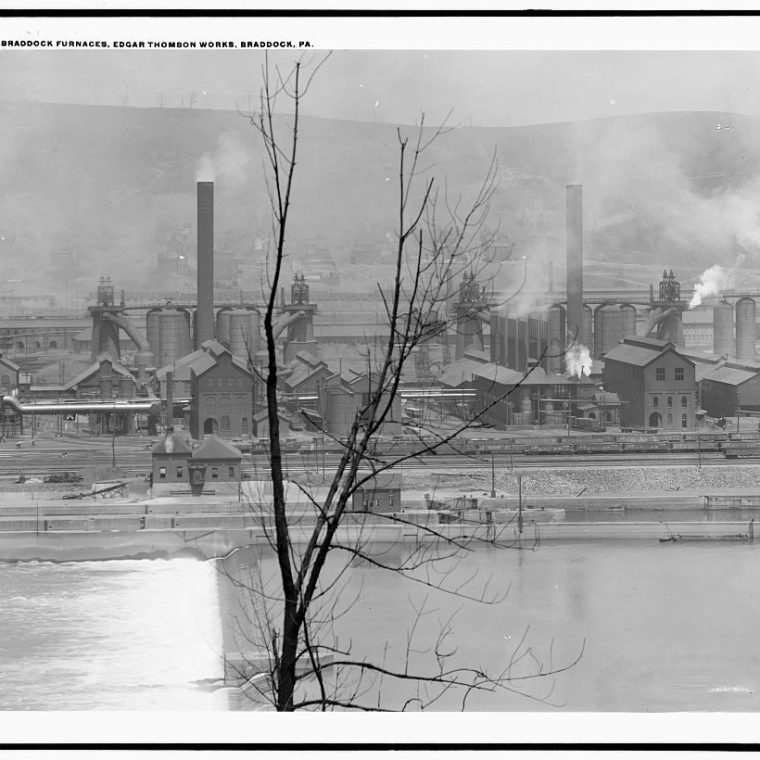

The Edgar Thomson Works, seen above, was a turning point in the wrought-iron versus steel argument in the United States. In 1875, steel was stronger and had more consistent properties, but only incrementally so. It was also more expensive. People chose which metal to use, or mixed and matched within a single project, based on fluctuations in the cost/strength ratios for the two metals. Carnegie Steel, starting in the mid-1870s at the Thomson works, worked on driving down the cost of steel. This was not altruism, but rather a business decision to sell steel and hurt competitors. It had the effect of increasing steel use in general but also increasing steel at the expense of iron.