
In the study of history, presentism is the tendency to view past events solely from current-day perspective. If your goal is to understand the past, a modern perspective may miss important information. To say this is not to say that the past perspective was correct, but rather that to understand past events you have to understand what people in the past were thinking.
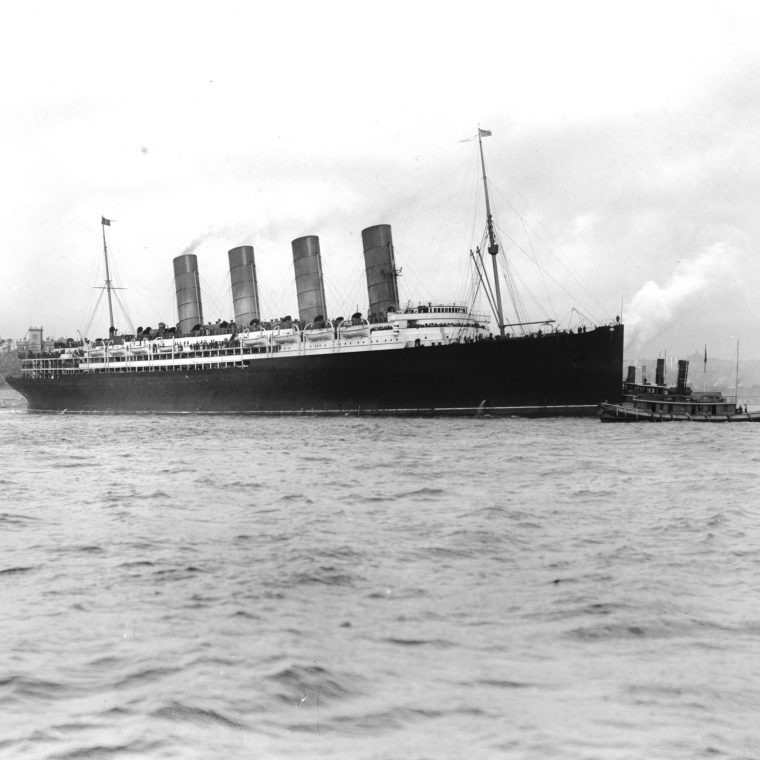
I happened across the picture above while looking for something else, and it triggered this particular line of thought. That’s RMS Lusitania in 1907 or so. The ship was famous from the day it was built, but we remember it today because of its tragic sinking in 1915. In 1907, Lusitania and its sister ship the Mauritania were the two fastest and largest passenger liners in the world. They represented the pinnacle of ship design for ordinary purposes. Even after bigger ships were built – the Olympic in 1911 and its sister the Titanic in 1912 – Lusitania and Mauritania were still the fastest. For better or worse, people are attracted to examples of technological excellence, which is why the Detroit Publishing Company sold this picture. For 105 years, mentioning the Lusitania means discussing the 1200 people who died when it sank, but that horrible reputation is almost exactly opposite what people thought of the ship earlier on. I’m using this example because calling the Titanic “unsinkable” has become a cliche; no one ever said exactly that, but the use of separate water-tight compartments was an improvement in ship design, and, prior to 1912, one that people believed would make ship disasters unlikely. To call them naive or careless is presentism.
To bring this into the realm of buildings, here’s the Windsor Hotel, on the east side of Fifth Avenue between 46th and 47th Streets:

It was a large building, seven stories high and with a footprint around 20,000 square feet, but its interior was constructed in the same manner as the rowhouses on the right side of the photo: entirely from wood. The stairs were wood in open wells, and there were dumbwaiters in wood shafts. All of this was legal in 1873, when it was constructed. It burned to the ground in 1899, killing dozens. We would not construct a large public building in this way today, knowing that it would be a firetrap. You can argue that, following the Chicago fire of 1871, the people who built the Windsor should have known better as well. But this kind of construction wasn’t completely outlawed in New York until the 1887 building code (parts were outlawed by the 1882 building code) and that wasn’t because of laziness or corruption. Using the readily-available technology of 1873, it would have been exceedingly difficult to build a hotel this size in a manner that was proper fireproofed. More importantly, the varying degrees of importance of different issues were not yet entirely understood. If the building had interior masonry firewalls, that would have slowed the spread of fire and therefore saved some lives, but it is still likely that the building would have burned completely and there would have been fatalities. If the stairs were enclosed in masonry walls (ruining their grandeur of course) and the dumbwaiters had been in masonry shafts with metal doors, the fire might well have been contained and few deaths would have occurred. But people in 1873 did not yet understand this.
I’ve talked before about CROSS and SCOSS. The purpose of studying failures is not to show we know better than our predecessors. It is to learn from their mistakes that we might well have made if we were in their shoes.

You must be logged in to post a comment.