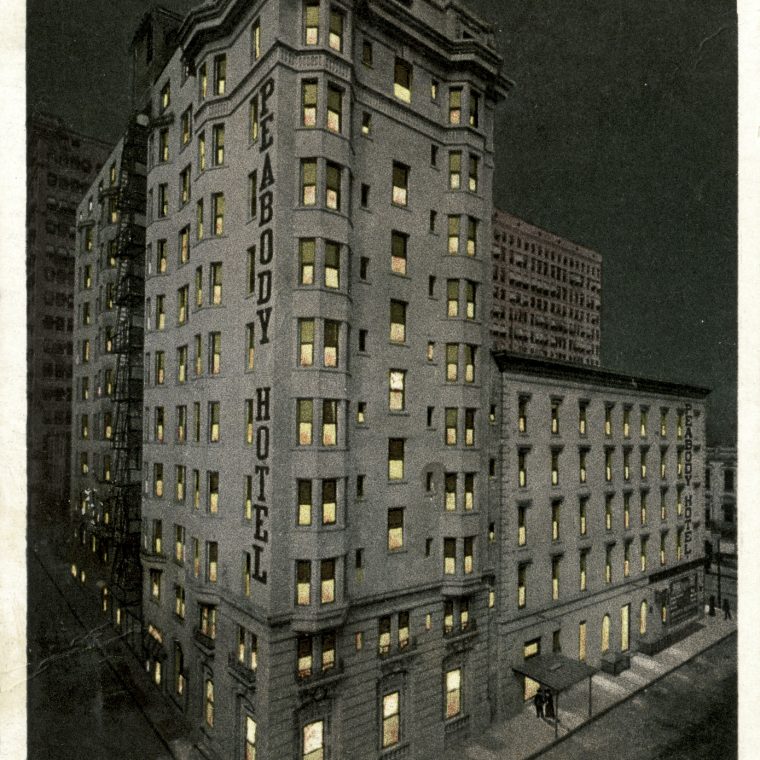

In 1995, I had a small project in downtown Memphis and stayed two nights at the Peabody Hotel, pictured above in a 1920s postcard. It is a nice hotel but that’s not why it’s famous. It is famous because there is a group of ducks that live on the hotel’s roof and spend their days swimming in the lobby fountain. I did not know of this, and I was confounded on my last day there, while sitting in the lobby, to see a line of duck exit an elevator, walk across the lobby, and hop into the fountain. One aspect of it that made it so bizarre was that it was so matter-of-fact: everyone but me either ignored the ducks or looked at them briefly before returning to whatever they had been doing. When I got home, I poked around and learned about the ducks and was greatly relieved. (No, I did not ask anyone in the lobby what was going on. What if they had said “What ducks?”)
The Peabody as a business has been around since the 1860s; the current building was completed in 1925. It’s a steel-framed skyscraper, but for the 1920s on the short side. It’s actually quite similar, physically, to the skyscrapers in yesterday’s 1906 view of Memphis, but of course the skyscraper world had moved on in the intervening 19 years.
The other interesting thing on the postcard is the caption. Advertising that a hotel is in the heart of the business district makes obvious sense. Advertising that a hotel is in the heart of the shopping district makes obvious sense. But what it does it mean to say that a hotel is in the heart of the skyscraper district? It suggests that skyscrapers were a tourist attraction in Memphis just as they were in New York and Chicago. It also suggests something that may or may not be true: that the business district and skyscraper district were distinct rather than coterminous.