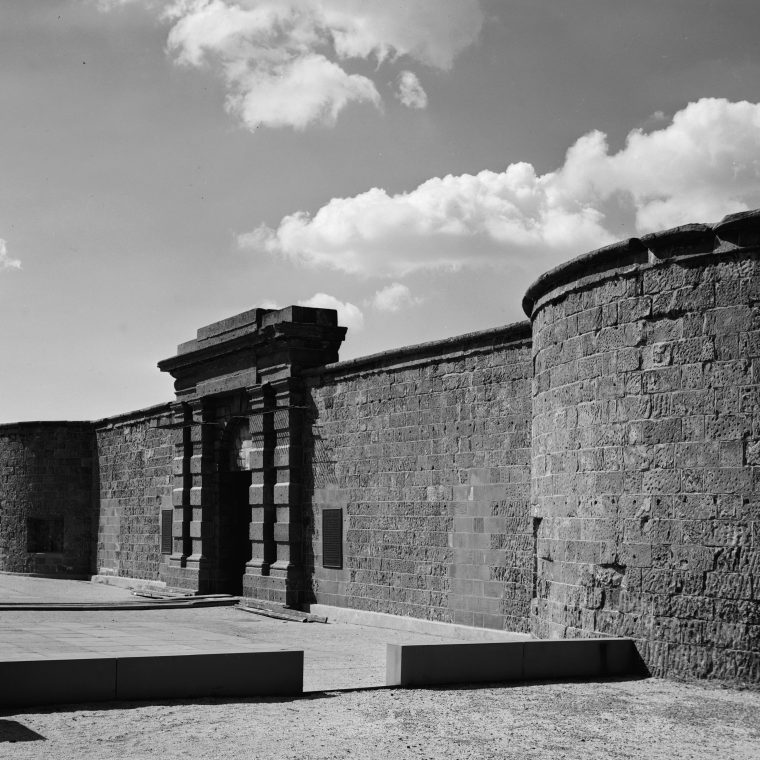

The second project we worked on that won a Lucy Moses Award this year was Castle Clinton, the fort at the very southern tip of Manhattan. Over the last 210 years, it’s been a fort, a theater, New York’s immigration station, New York’s aquarium, and now a historic monument. In concept, it’s about as simple as a building could be, consisting of a three-quarter circle of nine-foot thick stone wall, with a straight wall at the land-side entry. It had a roof and interior seating built for the theater, a roof for immigration, and a couple of extra stories added for the fish, but all that is now gone.

It was built as part of the “first system” of forts built to protect New York harbor and, in general, the east coast against naval attack. It is a designated landmark of the New York City Landmarks Preservation Commission, listed on the National Register of Historic Places, and is a National Monument designated by the United States National Park Service.
It a bit strange to have this project finished, as Marie and I started an investigation of the structural condition of the walls in 1997. We analyzed weathering damage, reviewed previous restorations, analyzed the nature of the fort’s construction (the thick sandstone rubble-core walls are supported on a circular timber grillage on what had been a rock off the tip of Manhattan, later subsumed by landfill), and reviewed records of earth movement during construction of the Battery Park highway underpass and the Brooklyn-Battery Tunnel. That existing conditions study was used to determine the scope or work required for long-term repairs, which began in 2016. Cracks, spalls, and similar damage to the walls was repaired, but the outward tilt of the wall, which has been present for at least 120 years, remains as is. Surveyors’ prisms have been placed on top of the wall to allow for precise measurement of the tilt for the indefinite future. Gabi Pardo was the project manager for the recent work.



You must be logged in to post a comment.