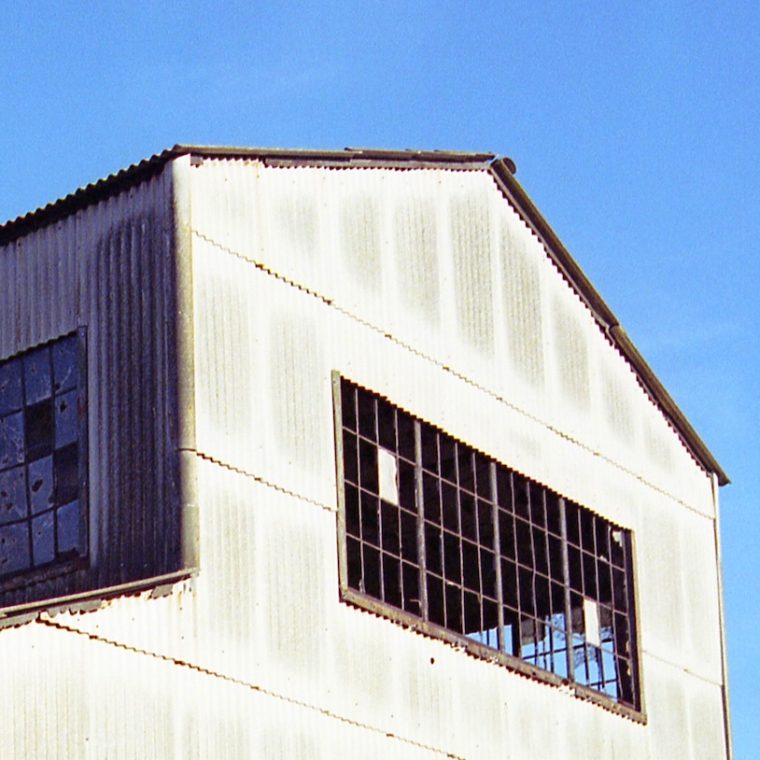

I vaguely know Fort Tilden – a former army base near the west end of the Rockaway peninsula – but its remote location and the lack of anything there that really interests me mean that I don’t know it particularly well. So the headline “Time to pay last respects to the abandoned hangar at Fort Tilden in Rockaway” piqued my interest to at least find out what building was going to be torn down. I was also momentarily confused by the use of the word “hangar” as I am fairly sure that I know the history of military aviation in New York City and it does not include Fort Tilden.

The building in question, now known as T-9, had nothing to do with aviation: it was a train shed. And that is even more confusing because the nearest approach to Fort Tilden by a regular railroad is the west end of the former Long Island Railroad Rockaway Beach line, now the A train subway, about three miles to the east. It turns out that the fort had its own railroad, not connected to any other rail, that served to carry artillery shells from storage to the big guns facing the ocean. (This is as good place as any to note that the vast maritime fort system of the United States was intended for serious use, and fortunately saw little.) I imagine the engines and other rolling stock must have been brought there by barge. The railroad, like the rest of the fort, was closed in the mid-1970s. The abandoned building was occasionally used for art installations until it was badly damaged by a fire last year, and is now scheduled for demolition.
There are two main paths for a building to be labeled as “historic.” The first is through its architecture (either because it’s distinctive or, ironically, because it’s not and the building is a good example of an important type) and the second is for its history, including who may have used it. In this case, the building is an absolutely boring steel-frame industrial building of the 1910s or 20s. There was nothing distinctive about it physically, and it’s not like examples of this type are rare. The history is somewhat more interesting, from use in a World War I era fort to use for art, but it’s a fort that most people have never heard of and the post-fort use was sporadic. In short, more important buildings have been lost, and while people may be sorry to see this building go, no one is fighting hard for it. This is a case where a new public building on the beach would probably be a better investment for the National Park service than trying to do anything with T-9 would have been.

You must be logged in to post a comment.