

Good News! Maybe! If You Believe It! Which I don’t! Travel and Leisure Magazine has published the results of a survey from the “Institute for Quality of Life” which states that New York City was ranked seventeenth globally in the Institute’s annual “Happy City Index”, which makes it the happiest city in the US. Here’s their description of New York: City Profile.
There is, as the sociologists say, a lot to unpack here. The Institute for Quality of Life – from my rather cursory look at their website – is based on London and is centered around the index, while also offering a number of classes, both online and in-person around the world. So, good for them. I believe they take their mission seriously. And rather than paraphrase:
Our mission is to support cities, businesses, communities, and other organisations in improving quality of life for their stakeholders through rigorous research, the sharing of best practices, and fostering international collaboration.
At the heart of our work is one of the world’s most comprehensive studies on development, presented through the Happy City Index. This ambitious initiative unites nearly 200 volunteers from across the globe, analysing cities, organisations, and communities using 82 indicators across 26 areas of activity. Their collective efforts provide invaluable insights into the factors shaping well-being at various levels.
I generally don’t feel a need to spit in other people’s food, so if this is what they do, that’s fine with me. There’s an assumption embedded throughout that mission statement that it is possible to quantify both quality of life and happiness. I personally disagree with that. There may be aspects of those two qualitative ideas that can be quantitatively measured, but overall I don’t think they can be. The “indicators” and “areas of activity” may be meaningful but the meanings vary from person to person. To use a specific example, most people prefer a clean city, but if you’re talking about punk rockers on the Lower East Side in the 70s, the dirtier the better.
An example of subjectivity creeping in to the seemingly-objective numbers is the score given for “Governance.” New York was awarded 226 points, which is, unless I missed something, the highest score for that topic on the list. Our city government functions, and there are portions of it I quite like, but I cannot believe that every other major city in the world has less-good governance. Our municipal elections are famously messy; the city government does not control various aspects of life here that are superseded by state, federal, or independent-agency control; and we have a good amount of conflict over various issues. The description of NYC’s governance included in our profile reads:
– Number of residents (per 1000) involved in local governance structures: 0.33
– City have its own open data website, or does it regularly report and publish its data on the national open data platform managed by a government agency: yes
– Datasets containing information about the city and its residents which are available on the open data portal managed by the city or a government agency to which the city provides information: 4000
– E-services: fault reporting, electronic payments, on-line appointment scheduling: yes
– Existence of up-to-date and officially adopted development strategy: yes
– Number of valid and currently in-force sectoral (thematic) strategies: 8
There are six items and three of them concern web data and portals. Those are great, and maybe we are ahead of most places, but how important are datasets to residents’ happiness? I don’t know if having a third of a person per thousand in governance is high or low, good or bad. The last two items concern having development and other strategies in place, which we do. There’s a difference between having a strategy and seeing it happen: we’ve had an official plan for the Second Avenue subway since 1950; the first segment, of four, opened in 2017, and the second segment has just started to move into construction. And, again, I don’t know that the presence of those strategies, up to date or not, affects happiness.
In short New York City happiness is a land of contrasts.

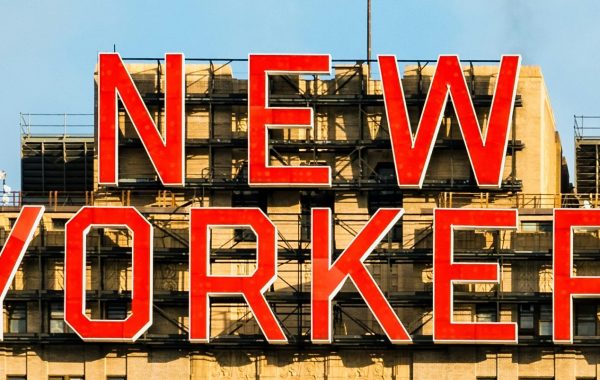
Photo by Triston Dunn on Unsplash

You must be logged in to post a comment.