
There’s not a great deal of new information in “Take a Ride on New York City’s Future Train Line” in the New York Times, about the proposed Interborough Express, but the fantastic graphics more than make up for that. The IBX, which would take 14 miles of underused rail in Brooklyn and Queens and convert it to passenger use is a big deal, but the nature of underused, century-old rail infrastructure is that most people have no idea of what it is or what it looks like. This article solves that problem nicely, showing the tracks running past heavily-used Long Island Railroad and subway tracks, and winding their way to nowhere in particular.
It’s worth repeating: that 14-mile route passes the homes of about a million people, stops in neighborhoods (for example, Maspeth in Queens and Flatlands in Brooklyn) that are currently underserved by mass transit, and intersects (by my count) 17 subways lines, creating connections that are right now impossible. For people not from New York, a reminder: Brooklyn and Queens are the two most populous boroughs and together have over five million people, or more than the individual populations of half of the fifty states. The projected ridership of the IBX, 160,000 fares per day, would make it, by itself, the eighth-most-heavily used mass transit system in the US, behind San Francisco’s BART and ahead of Atlanta’s MARTA rail.
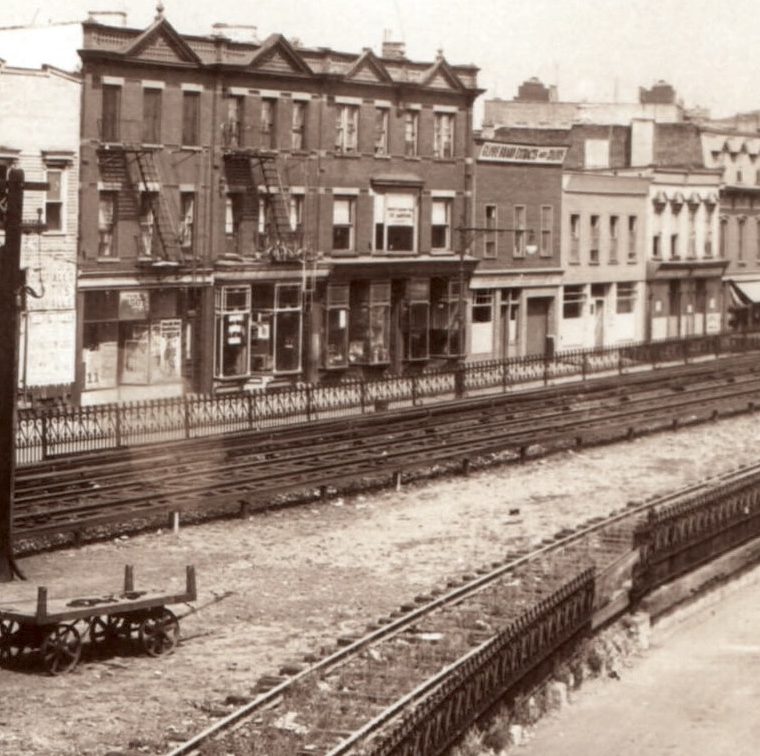
Starting shortly after 1900, a great deal of money and effort was put into heavy rail in and around New York. Electrification of the New York Central, New Haven Railroad, and Pennsylvania Railroads; the constriction of Grand Central Terminal and Penn Station; and the Pennsylvania’s absorption of the Long Island Railroad to allow for Penn Station to have a yard in Queens and a route to New England, all required enormous upgrades to the existing rail infrastructure, which continued into the mid-1900s. Here’s a late example from 1936: the Long Island Railroad’s Atlantic Branch running from the elevated structure over Atlantic Avenue to the west down to at-grade near Snediker Avenue:

Within a few years, the current elevated structure, which has the avenue on top of the rail, was built, eliminating the grade crossings. The fact that the IBX is in a series of below-grade cuts is not an accident. It was part of a deliberate effort to separate rail traffic from pedestrian and vehicular traffic. That effort was entirely successful, and has left the city with rail infrastructure that is below or above grade. If the IBX had to run at grade, it would be much slower, more dangerous, and less useful.
The 450 words above boil down to this: investing in infrastructure can pay off for a long time after the work is complete.


You must be logged in to post a comment.