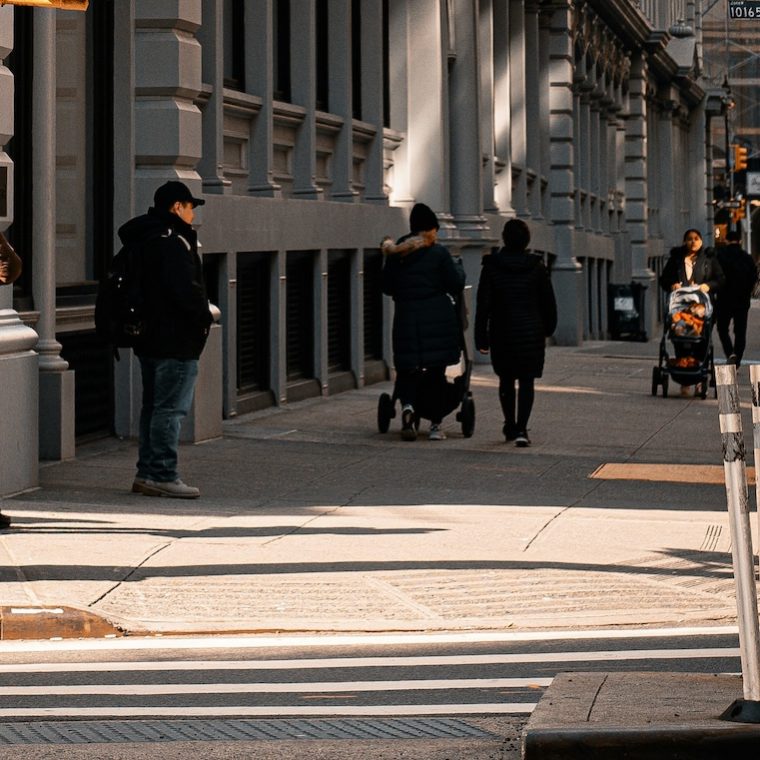

There are a lot of ways you can look at a city, and the bigger it is, the more there are. A few obvious options are population growth or shrinkage, commerce (measured in dollars, or number of businesses operating), and real estate occupied. You might look at traffic – in and out of downtown, or in and out of the city, or within the city. Or, if you wanted a very New York statistic, you might look at foot traffic. In “‘Call it a comeback’: Manhattan foot traffic finally tops pre-pandemic times“, Arun Venugopal of Gothamist does just that.

The short version is that, following the recession of 2008-2009, New York had been on a long economic upswing when Covid hit in early 2020. In the late spring of that year, foot traffic in lower Manhattan was astonishingly, horror-movie low. I didn’t see as much of other areas such as Midtown, but they had big drops in foot traffic as well. That, in turn, killed a fair number of small retail businesses, which don’t have large margins, making downtown less attractive. The increase in working from home and hybrid working was thought to have permanently reduced the amount of foot traffic in the city’s commercial districts.
It turns out that “permanently” is a long time. As long as we’re talking about a long time, I’ll quote Aristotle: “Men come together in cities in order to live: they remain together in order to live the good life.” Maybe the comeback is nothing more than the natural attraction of life here winning out over temporary adversity.


You must be logged in to post a comment.