
The meanings of words change, drift, slip. After the Great Fire of 18351 it turned out that buildings had been described as “fireproof” even though their interiors were wood because they had exterior masonry walls on all sides. Later on, in the 1870s and 80s, buildings were described as “fireproof” because they were built of non-flammable materials, even though metal structure was not protected from heat, and many such buildings suffered significant damage in various fires. By the time we reach the era of modern fireproofing and egress, after the Triangle Fire, the word “fireproof” was falling out of use because people had come to the realization that nothing was. You could protect against the effects of fire, but not withstand it indefinitely.
On that note, some old photos of the effect of a mild interior fire on a building’s facade. The fire was not bad enough to destroy any of the interior structure, although it damaged quite a bit of furniture and finishes. First, surface spalling at a limestone window head:

There’s damage to the ornament above the window – all from the combination of heat and thermal shock when water was sprayed on the stone- but the erosion of the window head and left jamb is more serious. If the fire in this area had burned a little longer, you’d have something like this:

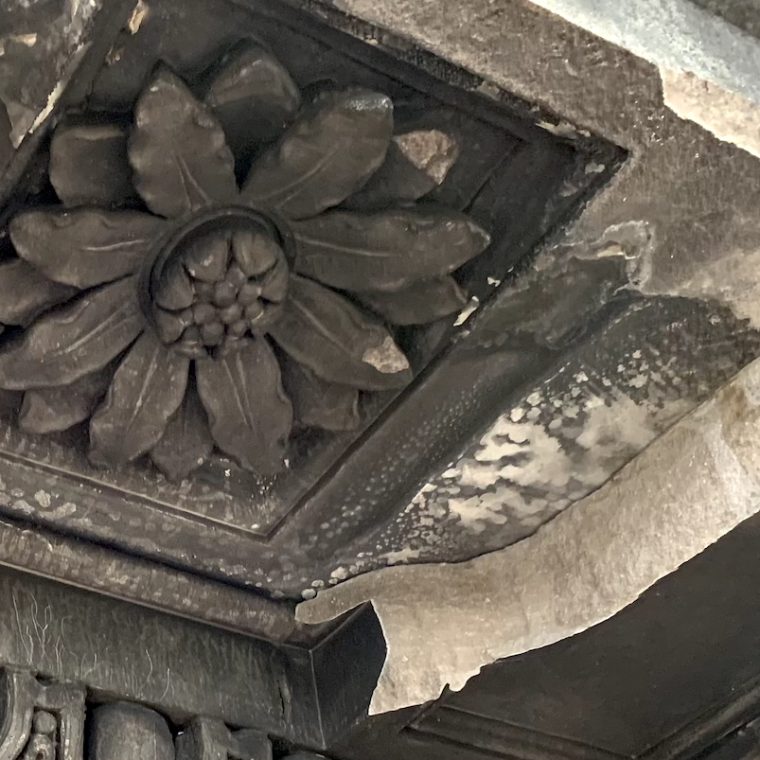
Half the window head has broken off, and the tops of the jambs aren’t much better. The decorative panel above is falling apart. On that note:

The fine detail in the decorative frieze and the underside of the cornice is particularly vulnerable, as the thinner stone at the carving is proportionally weaker and potentially heated from more than one side.
“Stone” is used as a synonym for “permanence.” But it’s not actually permanent. The combined effects of a fire and fire-fighting make that clear quickly; weathering does so slowly.
- The middle of the three Great Fires of New York. ↩︎


You must be logged in to post a comment.