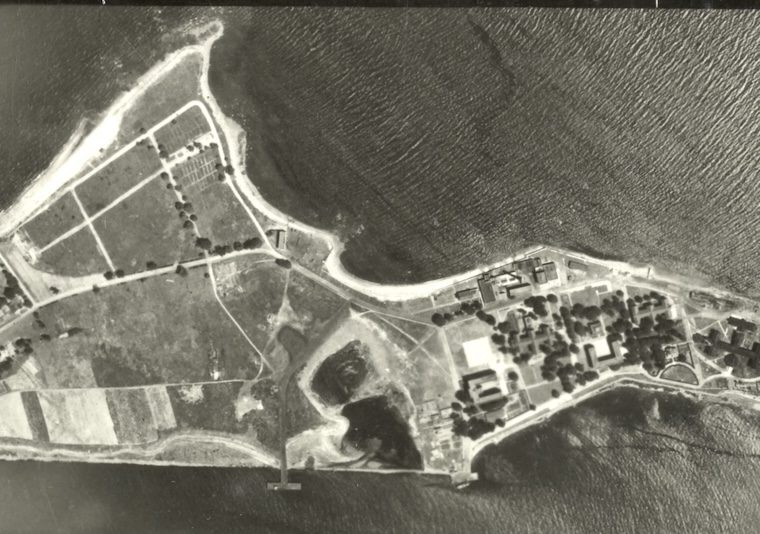

Via Core77, a review of the Hart Island Tumulus: here. Hart Island, just east of where the East River turns into the Long Island Sound, has a long history of public uses, all of them being ones that someone felt were best hidden from view, including various forms of hospital and prison. The island is most famous for its first and last public use: as New York City’s potter’s field, used to bury those who died here without family to claim them. The first burials there were around 1868; the burials continue now, although at a greatly reduced rate from previous decades. That reduction in burials is what has allowed the plan to transfer the island to control of the city Parks Department to move ahead.

There was a significant and temporary increase in burials during the worst of Covid in 2020. The tumulus is meant to commemorate all of the Covid deaths in New York, and is meant to be located over one of the mass graves used for Covid victims.
So far, so good. I’m not going to comment on the design of the tumulus in general – it seems appropriately somber on a large scale, and any comment beyond that is simply me commenting on my taste. However, one part of the description jumped out at me: “The proposal considers an architecture that is exposed and vulnerable to natural processes, allowing erosion, aging, and transformation to become part of its meaning. Rather than resisting time, the memorial incorporates change as a way of sustaining remembrance.” I have no issue with this concept in theory, or in a monument that is readily visible. Hart Island is notoriously difficult to get to, and while there are some plans about increasing ferry access, it will never be a spur-of-the-moment trip. As of now, the ferry runs twice per month. I suspect few people make the trip more than once. So the gradual decay of the monument will not be seen as such. It will be seen as new, or aging, or falling apart depending on when someone goes to the island, rather than as slow-motion aging.
You must be logged in to post a comment.