
The New York Times article “The City’s Buried Treasure Isn’t Under the Dirt. It Is the Dirt.” is on a serious topic that lends itself to a lot of childish jokes. The simple fact is that the natural soil in this area is good for plants, but has been buried under construction for up to 400 years. The article does a nice job of spelling out how the soil can and is being used.
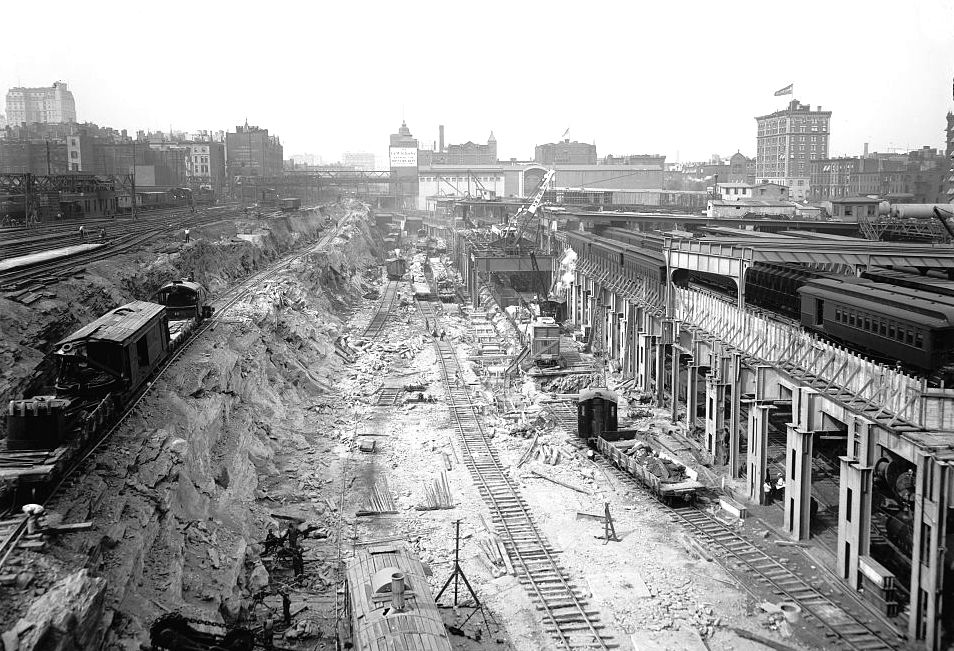
I keep circling back on the blog to the various forms of recycling and reuse because no one practice is enough to solve the various problems in ecology and pollution. In 1908, when the picture above was taken during excavation for the station yard at the new Grand Central Terminal, the excavated material was simply “spoil.” It could be used as landfill for a purpose or it could be simply dumped. That practice continues, but it’s a mistake: a lot of energy and effort goes into removing soil from its natural location, and to simply dump the soil is to waste it, the energy used in excavation and transportation, and the effort of all involved. (And, of course, money.)
The standard for a long time in New York was that the debris from a demolished building was dumped back in the cellar hole if the lot wasn’t going to be immediately reused. In one sense, this is a good idea, since it meant that we weren’t trucking around good soil to fill cellar holes. But it also means that a large proportion of the city’s surface is buildings or debris until you excavate down far enough to get below the old cellars. The situation is getting more complicated now that we’re starting to put green roofs on buildings: in theory, it would be great if we could simply lift the good soil that is underneath our city up to the roofs, but that’s akin to performing the trick of pulling the table clothe out from under the flowers in reverse, so that you start with the cloth in your hand and it ends up under the vase.
There’s no grand conclusion here. I just feel that pursuing every angle is a good idea. We can have the soil bank described in the article along with traditional cut and fill, along with green roofs.

You must be logged in to post a comment.