

The construction of buildings does not remove or destroy land acreage, it simply converts some of it to rooftops. People have had plantings on roofs for a very long time – the Hanging Gardens of Babylon, one of the seven ancient wonders of the world, were planted terrace roofs – and one of the reasons people who live in high-rises want terraces is so that they can have gardens.
A recent study of the economics and ecology of rooftop farming – “Small-scale urban agriculture results in high yields but requires judicious management of inputs to achieve sustainability” by Robert McDougall, Paul Kristiansen, and Romina Rader – looks at the issue of whether it makes any kind of sense to grow crops rather than flowers. The answer is blurry and therefore will reflect the biases of the reader. The study found that the food produced cost more than it would have at local stores, which is economically inefficient. Part of the reason is the small size and location of the farms, which forces all work to be hand labor. (You’re not getting a tractor and combine up on the high-rise roof.) Part of the reason is the work is being performed, mostly, by amateurs. But part of the reason is that people are enjoying themselves, treating the farms as semi-productive hobbies.
A lot of the return on roof farms is bigger and more diffuse than the buildings themselves. The farms absorb and slow water, reducing the load on sewer systems. They remove, in a small way, CO2 from the air. They reduce the urban heat-island effect. They provide better thermal insulation to buildings’ tops. It’s difficult to measure all of these effects but they’re real.
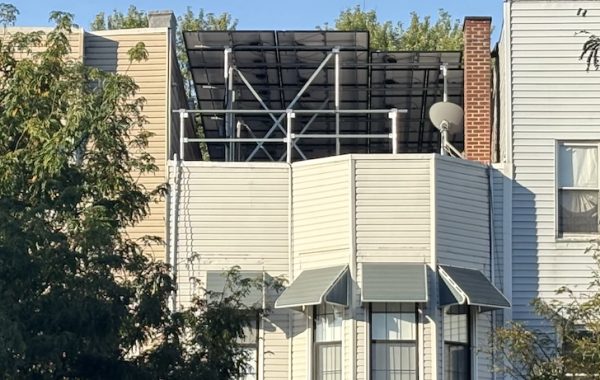
This is a project for big buildings. Small roofs may not have room for much farm land after bulkheads, mechanical equipment, and egress paths are removed. And the roofs have to be capable of carrying the soil load, have to be reinforced, or have to be excluded from the soil load path through the use of elevated dunnage. (I have to get structural engineering involved here somehow.) But there is literally nothing to lose by encouraging this idea.
You must be logged in to post a comment.