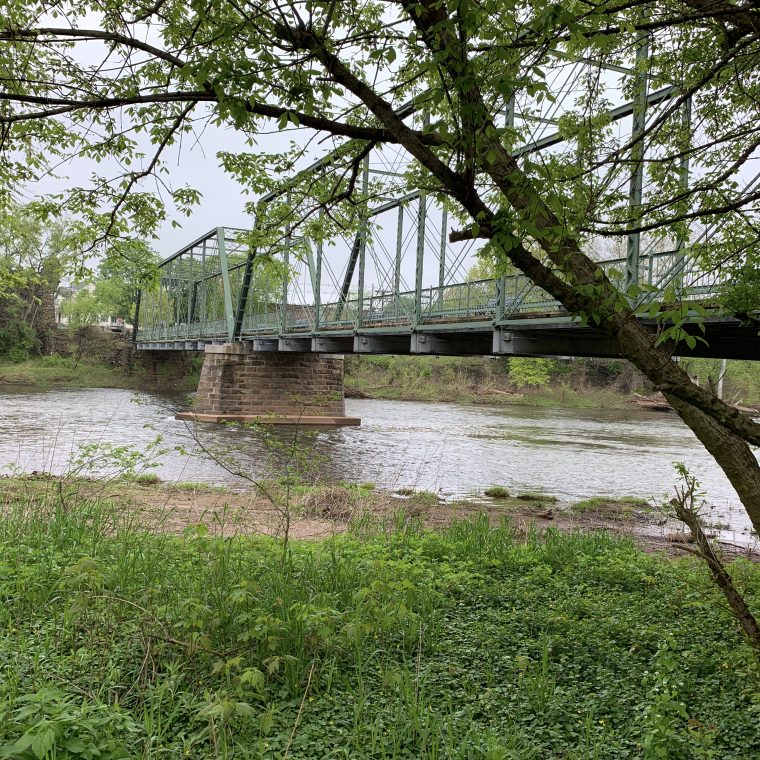

See here for part 1 and here for part 2 of this bridge.
Why don’t we build bridges like Nevius Street any more? The answer is definitely not because they are functionally obsolete: any individual example might be, but there’s no reason we couldn’t design truss bridges with more clearance and higher load capacities for modern traffic. Instead, most modern bridges of this size in the US are steel plate girders, and almost none are trusses. There are a few reasons why and they’re all related:
- Since the heyday of the steel truss bridge, the cost of steel material has gone relatively down and the cost of fabrication labor has gone up. That pushes everything towards simpler designs that use more metal.
- Since the heyday of the steel truss bridge, transportation options have improved, and it is no longer necessary to do most of the assembly on site to avoid transporting heavy and large pieces of steel.
- It’s easier to maintain (clean and paint) flat surfaces than geometrically complex ones. So maintenance is more likely to happen on a regular schedule and more likely to be done correctly.
- Both trusses and plate girders contain single points of failure (most truss nodes in a truss bridge, the bearing ends of a girder bridge) where a local failure will cause an overall failure, but truss bridges have more of them. And the combination of more difficult maintenance and many single points of failure is potentially disastrous.
- Through trusses, like this bridge, are exposed to impact during traffic accidents, while plate girder bridges have their structure below the deck.
Ultimately, plate-girder designs are more efficient for short span bridges in every way except the weight of steel. The spider-web of thin steel members that make up a bridge like Nevius Street isn’t there because it’s beautiful, it’s there to minimize the amount of steel used, which was a priority at the time it was built.