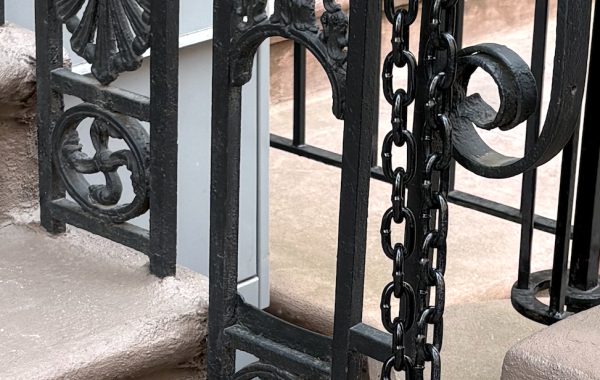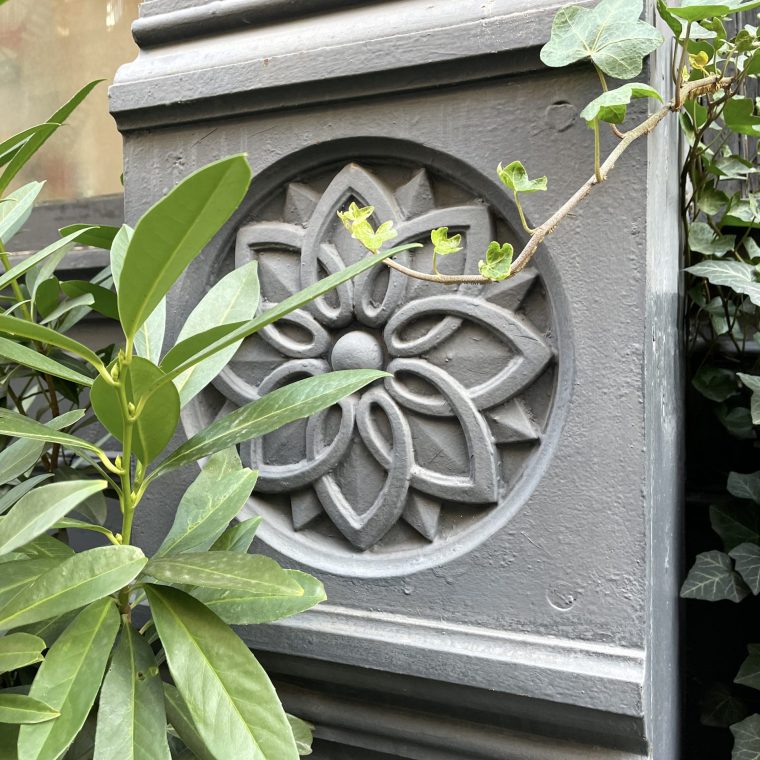

Some cast-iron ornament, roughly 140 years old. The edges of the iron are as sharp as the day it was made, blurred only by too many layers of paint.
Two materials that were popular in the past for facade ornament, cast iron and glazed terra cotta, present a good contrast to other materials: they effectively don’t erode. Their exteriors are sufficiently hard and impervious to water that they can be outside for decades or centuries without the softening of detail that comes form small-scale erosion. Brick, carved stone, and architectural precast concrete, on the other hand, gradually lose sharpness and detail. Of course, there’s a strong argument to made that form of aging is part of the charm of masonry facades.
That’s not to say that terra cotta and cast iron don’t age. Both are brittle and vulnerable to fracture. Most of the broken terra-cotta ornament I’ve seen was the result of rusting structural steel supports; most of the broken cast-iron ornament was the result of rusted wrought-iton bolts failing. Cast iron can rust, but doesn’t delaminate, so surface rust tends to be self-limiting. So these two materials suffer fewer minor effects of aging but worse major effects.