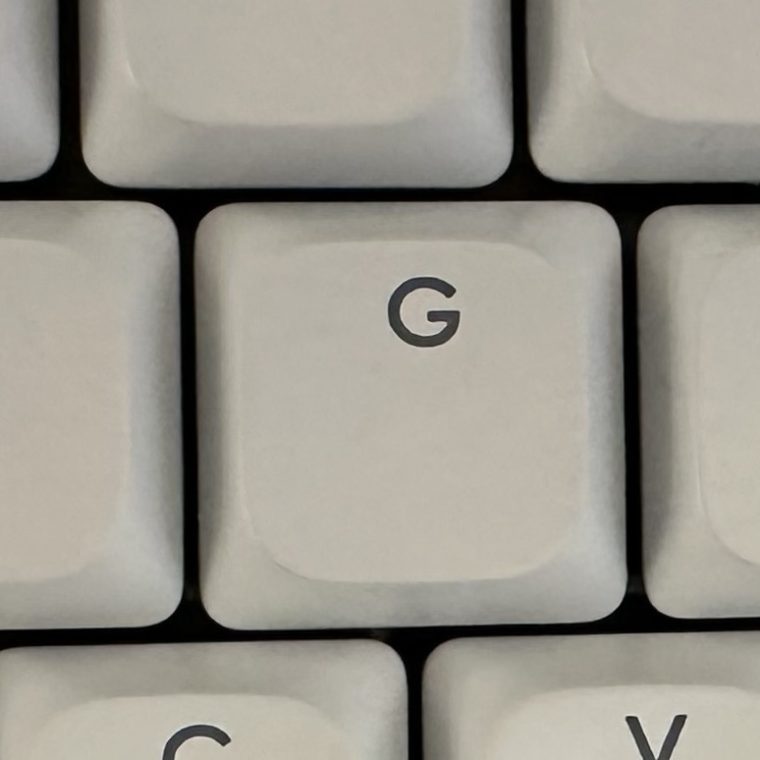

There’s a moral at the end of this story – a story which has nothing to do with engineering, architecture, construction, or NYC history – that has something to do with engineering, architecture, and construction, and maybe NYC history as well.
I like mechanical keyboards, with a long travel distance and some mechanical feedback when you press a key. I’m indifferent to the sound, but most mechanical keyboards these days make a point of providing a little click when the key is depressed fully. This kind of keyboard has becoming increasingly rare, partly because of the increasing dominance of laptops over desktops, and partly because of aesthetics. Mechanical keyboards are necessarily thicker and heavier than membrane and other new keyboard types.
So, I read some reviews and bought a new keyboard. It came, I paired it via bluetooth with my laptop, and everything was good. For about a minute. Then I went to start typing a response to an email and found a problem:

For a moment, I thought I had forgotten where the F key was supposed to be, and then I saw the two Hs and relaxed that the problem was with the physical object in front of me and not inside my brain. The issue was both better and worse than it seems: the keyboard worked just fine if you ignored how it looked: depressing the G key gave you an F; depressing the left H key gave you a G. So the problem was not the keys but rather the key-caps. A plastic problem, not a wiring problem.
The manufacturer’s support staff were friendly but incredulous until we emailed the photo above. They then mailed a new F key-cap. I also learned that there is a tool just for removing the key-caps on this kind of keyboard, and bought one. The new F arrived, I pulled the left H and set it aside, pulled the G and reset it in the proper location, and set the new F in its proper location. And the keyboard was now okay.

I lied: there is not a moral. There are several morals.
1. Quality control is a lot of work. The QWERTY keyboard has been around since the 1800s, but if your building them, you need to pay attention to where every key goes, on every one of thousands that you’re manufacturing.
2. Customer service is a lot of work. I’m going to guess that the fellow who helped us did not wake up expecting to be asked for an F key-cap. You simply don’t know in advance everything that might go wrong.
3. Satechi dealt with this problem in an intelligent manner. I don’t blame them for being skeptical of some random person asking for an F key-cap; I compliment them for sending one quickly when they saw the photo.


You must be logged in to post a comment.