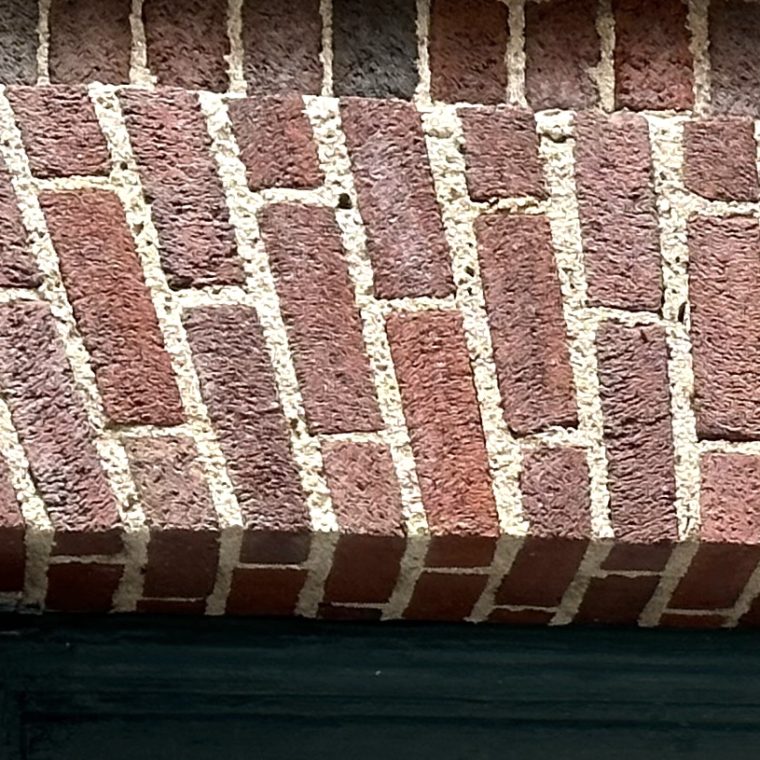


There is absolutely nothing unique about a masonry flat arch serving as a window head, but it’s relatively rare on steel-frame buildings like this 1920s apartment house on the Upper East Side. There are two tip-offs that it’s a real arch and not just a cleverly-hidden lintel: first, the lack of any damage that could come from rust-jacking and, second, the brick joints visible on the underside of the arch, showing that there’s no steel shelf there.
We don’t see this detail more often because it’s more expensive than providing loose steel-angle lintels in the masonry and because it requires a skilled mason to look this good. Note that the bricks are tapered and generally not rectangular prisms. In other words, this represents a lot of specially-shaped bricks even through there is some repetition across the dozens of windows on this facade. Of course this complex facade is, in general, one that required skilled masons.
The other side of the equation is that by removing some steel from the outer portion of the facade, this design is more resistant to weathering than designs with loose lintels. That’s not by itself enough of a reason to go to all this trouble, but it does suggest that if a design calls for the appearance of an arch – and I’m looking at you, post-modernism – maybe we should consider using an actual arch.

You must be logged in to post a comment.