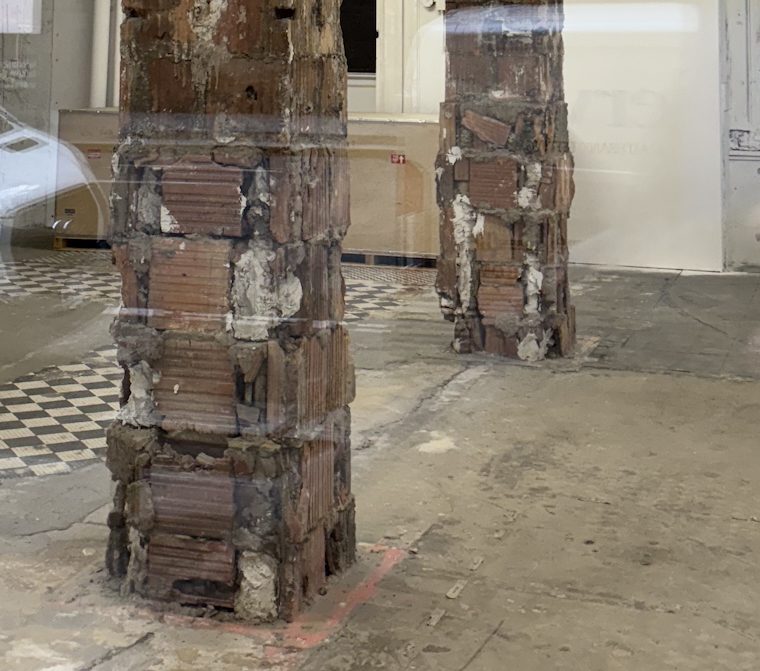

First I apologize for the reflections and glare artifacts in the picture: trying to get a decent photo through a clean and polished storefront window on a sunny day is a frustrating endeavor. But at least that gives a second meaning to the post title.

Second – but really first – that’s what the column fireproofing of a 1906 steel-frame skyscraper often looks like. This is a ground-floor retail space that’s beens stripped and we’re seeing the terra-cotta blocks surrounding the steel built-up columns. The blocks are 3 or 4 inches thick and hollow, and the mortar in the joints is messy at best. If you’re wondering how those gaps and other irregularities affect the fire-rating, keep in mind that these columns were originally plastered. Any gaps in the terra cotta would be filed in with gypsum plaster, which is an excellent fireproofing material.
The general switch from plaster to gypsum board has had an odd effect on fireproofing of this type. People used to leave the plaster, assuming that it would be repaired as needed and painted for the next tenant. We are now in the habit of removing all build-out when a space is being made ready to rent, and for some people that means removing plaster because they remove all gyp board. Technically, these columns need some work to restore the fireproofing, which will most likely be done in the form of gyp-board enclosures being put up around the terra cotta. That works okay although it is technically not correct unless the gyp board is itself designed as a rated system – in this case, for an old Class IA building, the columns should be rated for 4 hours – and that’s rarely true. We’d be better off if less demolition was done except when it needs to be done, but I doubt common practice will be changing soon.
You must be logged in to post a comment.