
Yesterday’s tale of woe hinged on the speed of change of a specific technology – personal-computer CAD – relative to the speed of my career. New technologies change rapidly as the people involved iterate cycles of experimentation, use, and business success or failure. AutoCad was a business winner in the 90s, Generic Cadd lost, but the trick is to remember that success or failure is only loosely connected to the quality of the technology. To use an old example that may not be known to everyone reading this, broad-gauge rail (usually with a 6-foot spacing between the rails) was better tech than standard gauge (with 4 feet, 8-1/2 inches between the rails). And broad gauge lost the battle so quickly and so thoroughly that most people have never heard of it.
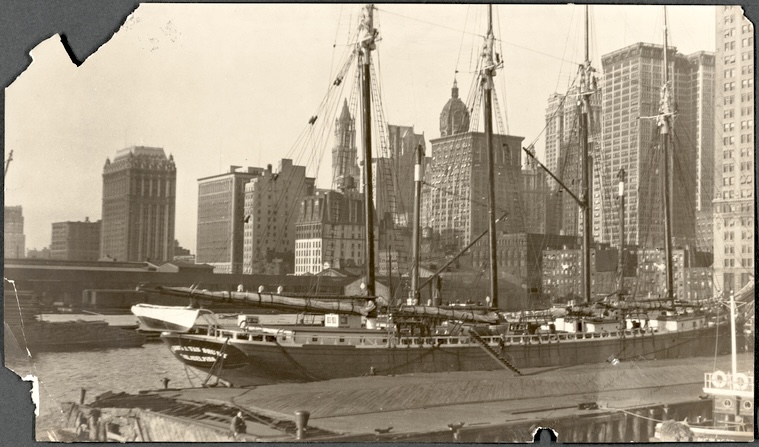
Here’s the Hudson River waterfront of lower Manhattan in 1915:

On the far left we have 90 West Street standing isolated; we’ve got the tops of the Woolworth and Singer towers inland, and on the far right, the Whitehall Building. All steel-framed skyscrapers and representative of a new technology (25 years at that point for skeleton framing) that was almost but not quite mature. Of course if we look at the foreground, there’s a whole different story. That’s a four-masted schooner tied up at a pier either used by the Pennsylvania Railroad or used by the Lehigh Valley railroad. These weren’t ferry piers, so most likely they were used for freight, maybe mail. Schooners as such were first built in the seventeenth century and became popular for coastal traffic in North America in the eighteenth century. This was a mature, well-tested, and popular technology, slowly being replaced by steam-engine ships about a century after that newer technology debuted.


You must be logged in to post a comment.