
From Julia Rez, a group of NASA reports found in the trash:

And from Nanoraptor, a slightly modified image:

The fake NASA technical report titles are:
- STRUCTURAL MARGINS OBSERVED IMMEDIATELY PRIOR TO EXCEEDANCE
- PRELIMINARY ANALYSIS OF UNEXPECTED WOBBLE IN A RIGIDLY NON-WOBBLING SYSTEM
- OBSERVED PERFORMANCE OF COMPONENTS KNOWN TO HAVE BEEN INSTALLED BACKWARDS
- COGNITIVE LOAD IMPLICATIONS OF ACRONYMS REFERRING TO OTHER ACRONYMS
- THERMAL CHARACTERISTICS OF MATERIALS DESCRIBED INFORMALLY AS “PROBABLY INFLAMMABLE”
- ON THE REPEATED SURVIVAL OF SYSTEMS NEVER INTENDED TO WORK
- THE EFFECT OF CLIPBOARDS ON PERCEIVED AUTHORITY IN TEST ENVIRONMENTS
- MECHANICAL PROPERTIES OF SUBSTANCES EXPOSED TO REPEATED MEETINGS
- ANOMALOUS RESULTS WHICH PERSIST DESPITE STRONG MANAGEMENT DISAPPROVAL
- A PRELIMINARY ASSESSMENT OF THE MOON’S APPARENT DISINTEREST IN OUR ACTIVITIES
With regard to the seventh title: I’ve been saying for thirty years that a hard-hat and clipboard allow you to go places you should not go without question. (Note: saying, not doing.) If you compare the original to the parody, this is really good work


There is a long tradition of making up fake papers. One of the more famous examples, from xkcd, is about scientific papers but several of the titles work equally well for engineering:

I’m going to stop the analysis here. When I was a student, I signed up for a literature course with a title something like “Humor and Satire” and ended up dropping it after two classes. It had become clear by then that we were going to analyze the humorous texts the way old-fashioned entomology exhibits present butterflies: dead and pinned to a board. I was afraid that after taking that class I might never laugh at a joke again. But, without analysis, I can definitely say that I’m going to be thinking about new fake engineering report titles.
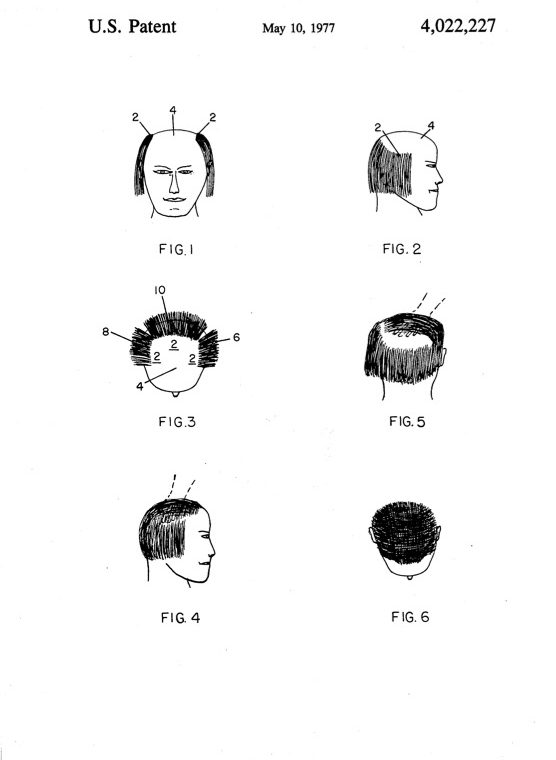
The header image is from U. S. Patent US4022227, “METHOD OF CONCEALING PARTIAL BALDNESS” and shows the patented method of combover. This patent won the 2004 IgNobel prize for Engineering.


You must be logged in to post a comment.