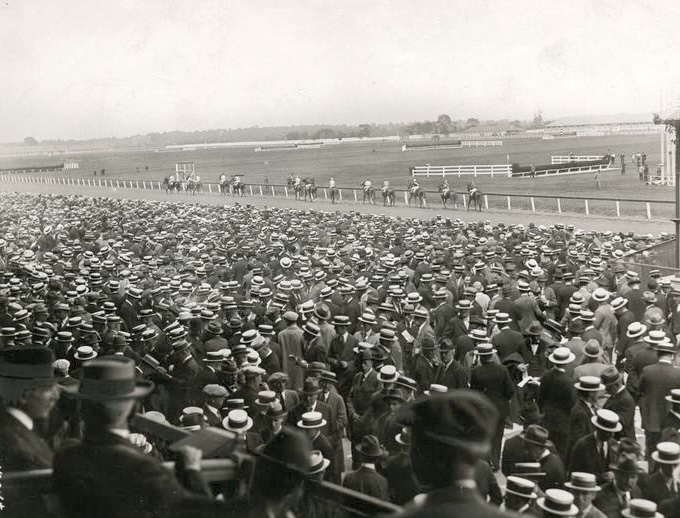

Two weeks ago, Aqueduct Racetrack closed permanently. If you are not interested in horse racing – and the sport has declined precipitously from its peak before World War II – it was possible to live in New York and not know that Aqueduct existed. Its location in southern Queens is out of the way unless you’re heading to JFK airport, the disappearance of Off-Track Betting parlors killed TV coverage of its races, and whatever attention non-fans pay to horse racing here tends to go to the track at Belmont, which is just outside the city line.

One of the reasons this blog goes on is that facts like that immediately raise questions for me such as “how many horse tracks have there been within the city limits?” particularly now that the answer is “none.” Fortunately, there’s a Wikipedia page just for that question here: “Defunct horse racing venues in New York City.” It feels cruel that Aqueduct is already on that page, but it is accurate. Some I knew about, some I did not:
- Aqueduct in Ozone Park (Queens).
- Brighton Beach Race Course in Brighton Beach (Brooklyn).
- Centreville Course, not far from where Aqueduct would be built.
- Corona / Fashion Course, in Corona (Queens) or, as it was originally known, West Flushing.
- Dexter Park in Woodhaven (Queens).
- Fleetwood Park in Morrisania (Bronx).
- Gravesend Race Track in Gravesend (Brooklyn).
- Jamaica Race Course in Jamaica (Queens).
- Jerome Park Racetrack in Bedford Park (Bronx).
- Morris Park Racecourse in Van Nest (Bronx).
- Sheepshead Bay Race Track, not far from Brighton Beach.
- Union Course in Woodhaven (still Queens).
What is notable about all of these locations is that land was (relatively) cheap there when the tracks were built. Horse racing takes up a lot of space when you compare to the intensity of land use, which would push track developers to the outskirts. Brighton and Sheepshead Bay were summer resort areas in the 1800s and Gravesend isn’t far away; Woodhaven was a town near the city of Brooklyn but with far less enforcement of blue laws. Southern Queens is flat and was not heavily populated until after World War II. And the Bronx was still looking for an identity when the courses were built there – by the 1920s it became a place with relatively cheap apartments and good mass transit, as opposed to the playground of the wealthy that some had tried to make it.


You must be logged in to post a comment.