

When I started my research into old skyscrapers, I faced a chicken-and-egg problem. What is a skyscraper? is one of the questions that I was attempting to answer with data about the physical structure of actual buildings, but I didn’t have that data when I started, as that was the point of the research. The only way to deal with a knot like that is to make a decision and later go back and fix it (meaning redoing research as needed) if the early decision turned out to be wrong. My decision was to look at every building in the country substantially completed by the end of 1900 that was ten stories high or taller.
Using the arbitrary cut-off of ten stories had its ups and downs. A few famous buildings that I could not realistically leave out were nine stories with a basement (a partially below-grade story) so I decided that, as the person who created the arbitrary cut-off of 10, I could define it to include 9+B.
The other thing that happened was that it turned out to be just about the right height for the cut-off. Some of the earliest skeleton-frame buildings (as opposed to skyscrapers – they are intersecting but not identical circles on a Venn diagram) were exactly ten stories tall. But that height also included the tallest bearing-wall apartment houses. Which brings us to The Swannanoa near Union Square:
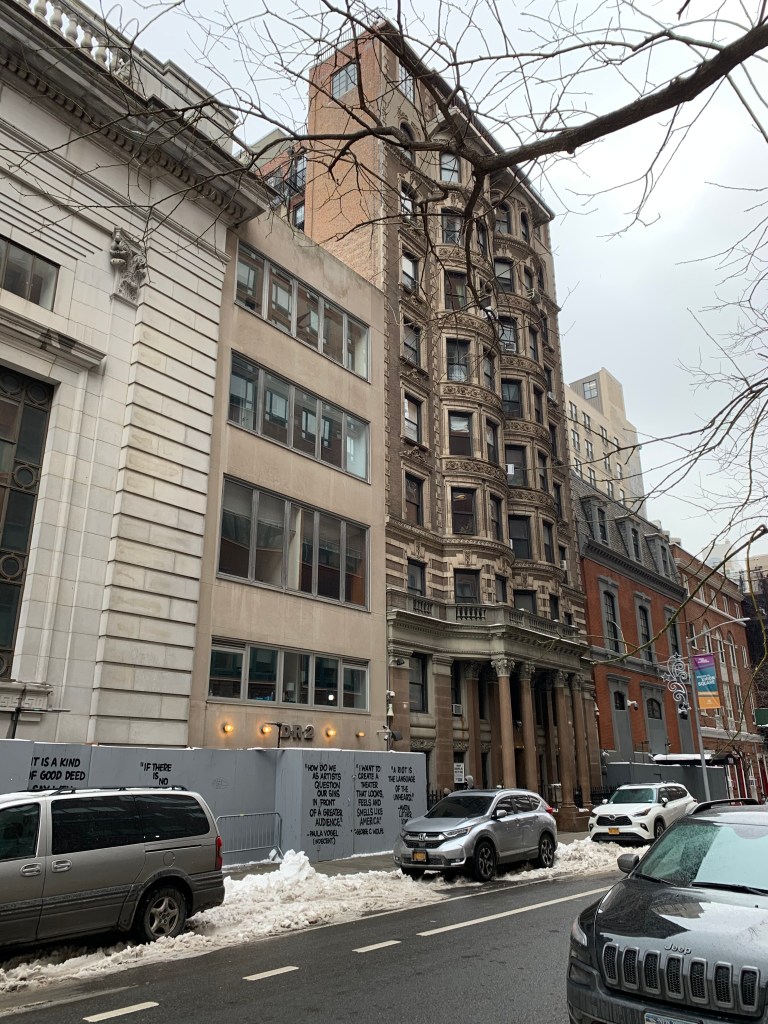
It’s ten stories tall – count ’em, ten – but physically it resembles an oversized tenement more than anything else. I assume the apartments inside are nicer than that sounds, or I doubt it would have survived 126 years. So it’s simultaneously short for a tall building, tall for its age and occupancy, backward looking on structure, and part of the first cohort of tall buildings.
You must be logged in to post a comment.