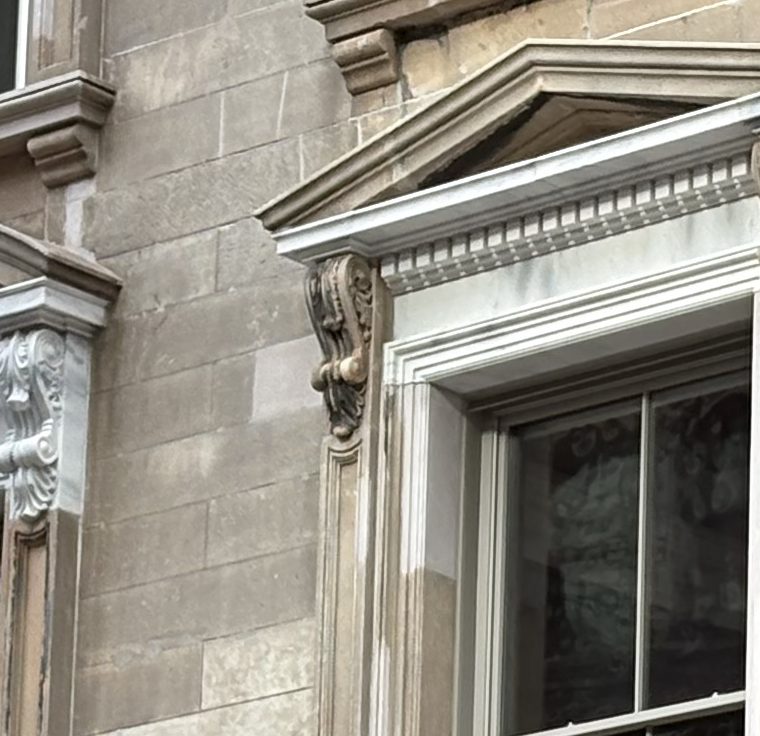

I’ve probably mentioned this issue before, but in September 2025 I came across the perfect illustration of it, so here we go:

That’s an 1860 commercial building designed by John Kellum, one of New York’s better mid-1800s architects. I’m reasonably sure that’s Tuckahoe marble veneer, both because of its appearance and because that was a popular white stone of that era in New York. A fair amount of ornament was recently replaced as part of a renovation, and the new stone looks to have been carved as good matches for the damaged material it replaced.
The old stone is dirty. Close to a hundred years of coal smoke from building boilers, and a different hundred years of automobile exhaust, can do that. And Tuckahoe marble is porous and has, as it weathers, a rough surface. There is no requirement for people to clean the facades of their buildings, and it’s unlikely it would matter if there were: I believe the light yellowish-tan areas between the second floor windows are where stone was cleaned, and the color is still nothing like the new stone. So if you cleaned the facade, the new stone would still stand out, just not as much. You could, of course, make the new stone dirty, but that really does against the grain of people in restoration. And anything non-permanent you use as fake dirt runs the risk of itself being damaging to the stone in the way that the real dirt was.
So: clean it all at considerable expense and still have a visible distinction between new and old, make the new stone dishonestly dirty and risk damaging it, or do nothing and have the building a little goofy-looking until natural dirt evens out the differences in color. Fortunately, this is not a life or death decision.


You must be logged in to post a comment.