
Continuing a bit further with yesterday’s line of thinking…what happens if we use the wrong code? (I’m going to say now, at the beginning of this post, and I’ll repeat at the end: we can and should use the current codes. I use current codes in analysis and design; I use old codes for reverse engineering, to understand how something was originally designed.)
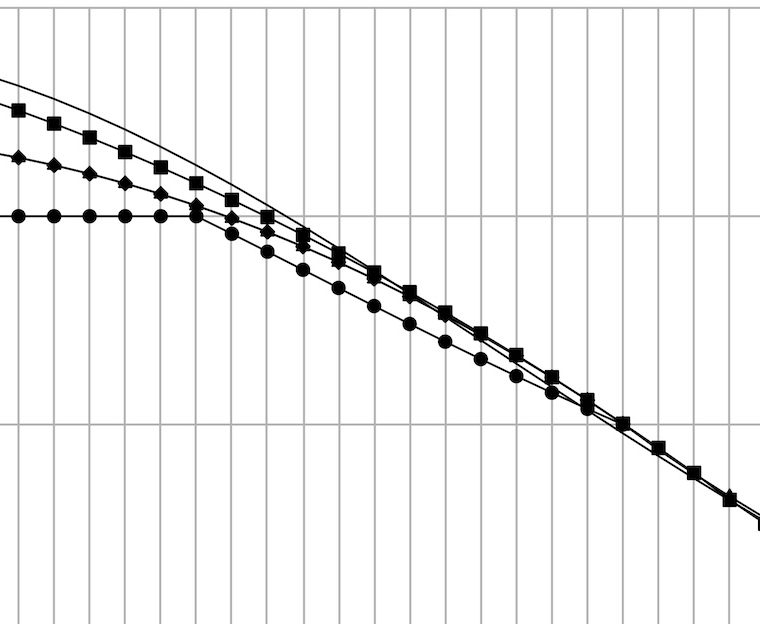
There are many ways that people use the wrong codes. The most common is inertia. I learned steel design using the 8th edition of the AISC manual, published in 1980. The current steel manual is the 16th edition, published last year. (Note that the specification, the core of the manual, is updated on a different schedule than the manual is, but that difference is not important for this discussion.) Obviously, the 8th edition is out of date, but it was very easy to keep using it longer than I should have, because I knew it backwards and forwards. My copy also had my notes in the end papers, thanks to a policy of open-books tests. How wrong is it? Some, not really very much. Foe example, in 2015 I did some comparative analysis of various steel codes for the allowable stress in axially-loaded columns. Here’s a graphic representation of part of the results, encompassing the AISC manuals from 1927 to 2010:

The difference between the curve for the AISC 6th edition, published in 1963, and the 16th edition is never more than 4 percent. In my many (more than I thought) rants here about significant figures, I have scoffed at such small differences. A halfway-clever engineer can shift things around 5 percent one way or 5 percent the other by playing with some of the gray-area assumptions that go into design. So if I were to get my allowable stress for a steel column from a 61-year-old code, it might be as much as 4 percent too conservative. So, so scary…
Also, a lot of the code changes with regard to structure have been creeping towards less conservative design. Note the trend in the graph above – the allowable stress has increased slightly and increased slightly again. The required live load in many occupancies is lower now than it was 100 years ago. Modern concrete design is less conservative than that of 1950.
There are, occasionally, big changes in codes. The incorporation of seismic design into the New York City Building Code in 1996 was such a change, for example. Another, with a more direct link to public safety, is the change in egress provisions of the NYC code between 1908 and 1916. In 1908, it was literally one paragraph (Part 12, section 75, if you’re interested); in 1916 in was almost two pages (Article 8, sections 150 to 162). Why the change? The Triangle fire in 1911 revealed, in the most horrific way possible, various flaws with the old egress schemes.
To recap: (1) Use current codes. It’s good for you, like eating your vegetables. (2) If you accidentally use an old code for structural design, you’ll be okay almost all the time. (3) There’s no way to know if you’re okay or have one of the rare cases where you’re not okay until it’s too late.


You must be logged in to post a comment.