
This is not Artemis II:

That’s Apollo 11. I have some vague memories from the summer of 1969, when I was four and a half, of watching the first moon landing on our black-and-white TV set. I certainly watched bits and pieces of the later Apollo missions, and Apollo-Soyuz in 1975, and Viking’s landing on Mars in 1976, and so on. Without attempting to analyze myself too far, I strongly suspect my long history with science fiction and technical non-fiction began with seeing NASA’s successes on TV.
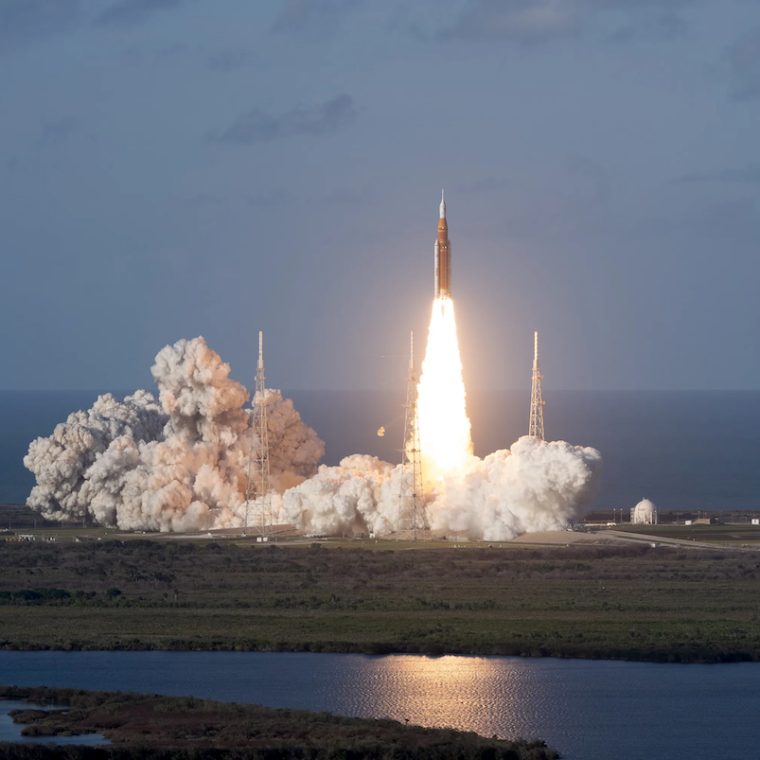
Here’s Artemis:
I’m not going to discuss the details because I am, at best, a dilettante when it comes to the engineering of space travel. But I want to point out something that is pretty often mislabeled in the media: space travel is not a triumph of science (although scientific experiments are sometimes performed in space). It is a triumph of engineering, and specifically design, which I think is the core of the profession. Design is taking the tools that we have – including available materials, methods of analysis and modeling, and physical tools in the basic sense – and using them to create something new. Or, in the case of Old Structures Engineering, creating something new in the service of fixing something that already exists.
I’m not trying to compare our work to that of the designers of Artemis. Our work, even when it is interesting and deals with uncommon problems, is within the realm of the ordinary. People have been designing building structure, one way or another, as long as civilization has existed. But I think the urge to exert control over the physical environment – to create something tangible that is new, or improved, or maintained after it should have fallen apart – comes from that same place. There are many different ways to experience the world and they’re all fine; the engineering way is to interact with it and see what you can make of it.


You must be logged in to post a comment.