
For the second time, I find myself writing about what can only be called hoax infrastructure, but in a different way than before.
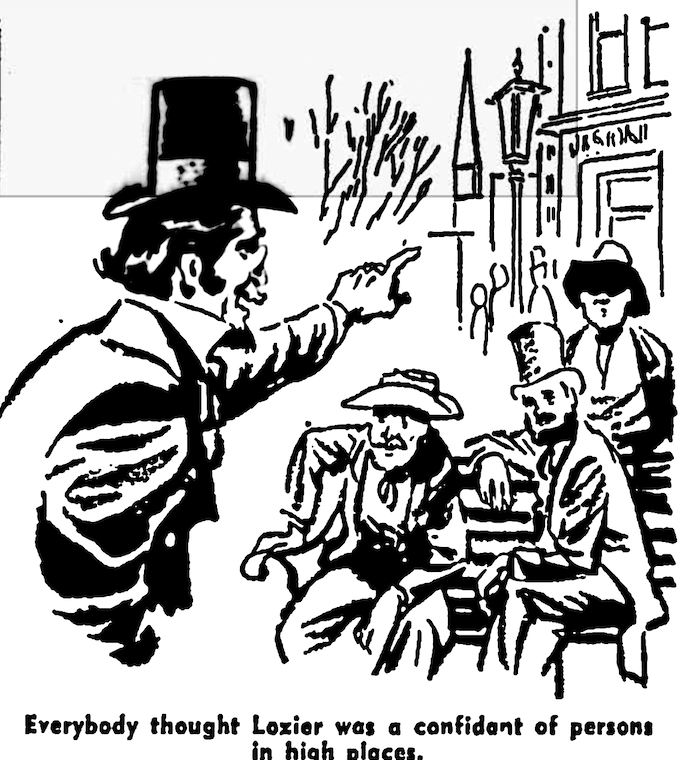
Previously, I talked about the great “Sawing Off Manhattan” hoax of 1824, which may never have happened even as a hoax. In other words, it’s a story that gets told about a hoax 202 years ago, but there’s really no evidence that the hoax actually occurred. Regardless, the concept of sawing off lower Manhattan, towing it into the bay, turning it around north-to-south, and putting it back in place is a great piece of fictitious civil engineering.
On to more recent, if not quite present times, we have the genius that is the Alameda-Weehawken Burrito Tunnel. This is a story told as history, of the construction in the early 1900s of a small diameter mail tunnel running in a straight line between the San Francisco Bay area and suburban New Jersey. The straight line would be a chord of the circular arc that connects those two points on the globe, and as such would be far underground at its midpoint. The fact that such a deep tunnel would hit temperatures of 900C is mentioned as an engineering challenge. Changes in mail delivery methods made the tunnel obsolete until it was repurposed to deliver burritos to the east coast.
This is, of course, insane. But the neutral, fake-history tone coupled with a fantastic mix of real facts (no propulsion would be required, thanks to gravity) and completely false nonsense sells the narrative. I’m not a big burrito eater, so I think my attraction to the story is that it casually describes the kind of massive infrastructure project that the civil engineering profession was built on.
I feel that each of these stories is of its time. In the early nineteenth century, New York was a boomtown, solving problems on a large scale (the Erie Canal was about to open, the creation of the Croton water system was a few years away); in the early twenty-first century, we have nostalgia for the grand projects of the past combined with repurposing our built heritage for new uses.