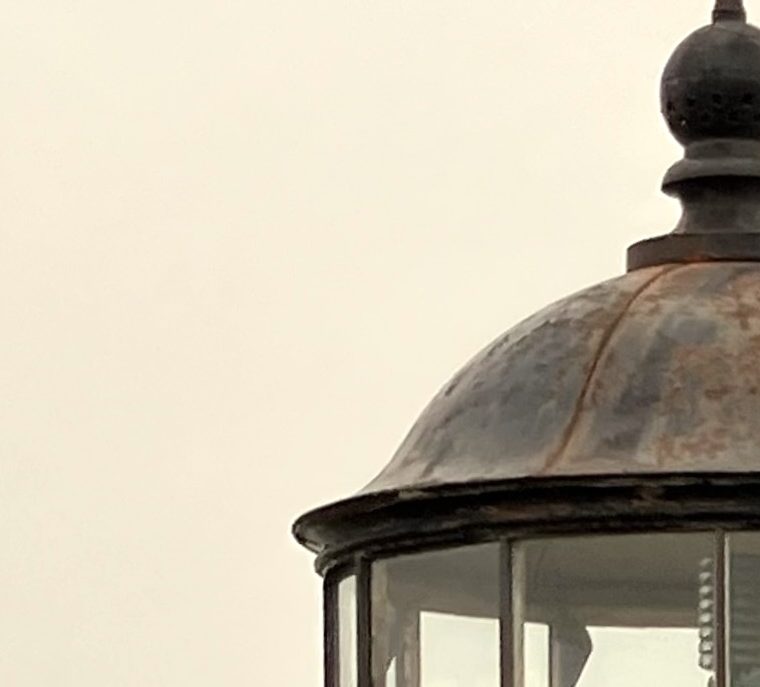

I mentioned the Old Field Point Light – a 200-year-old lighthouse on Long Island – earlier this week to discuss its masonry. The technology for the masonry building from 1823 still works fine, but the light portion of lighthouse technology has gone through several generations of improvement since then. The original light was a whale-oil lamp with a glass reflector, which is a fancy mirror. That was replaced in the 1860s with a kerosene lamp and then in the 1930s with an electric lamp. The use of fresnel lenses to focus lamp light for lighthouses began in France, with M. Fresnel, around when the Old Field Point Light was first built, but didn’t reach the US until the 1850s. A lot of lamp replacements in the mid- and late-1800s seem to have been driven by the installation of the fresnel lenses more than by changes in fuel.
The “tower” at this lighthouse is basically a large cupola, built of cast iron and so probably dating from the 1860s renovation:
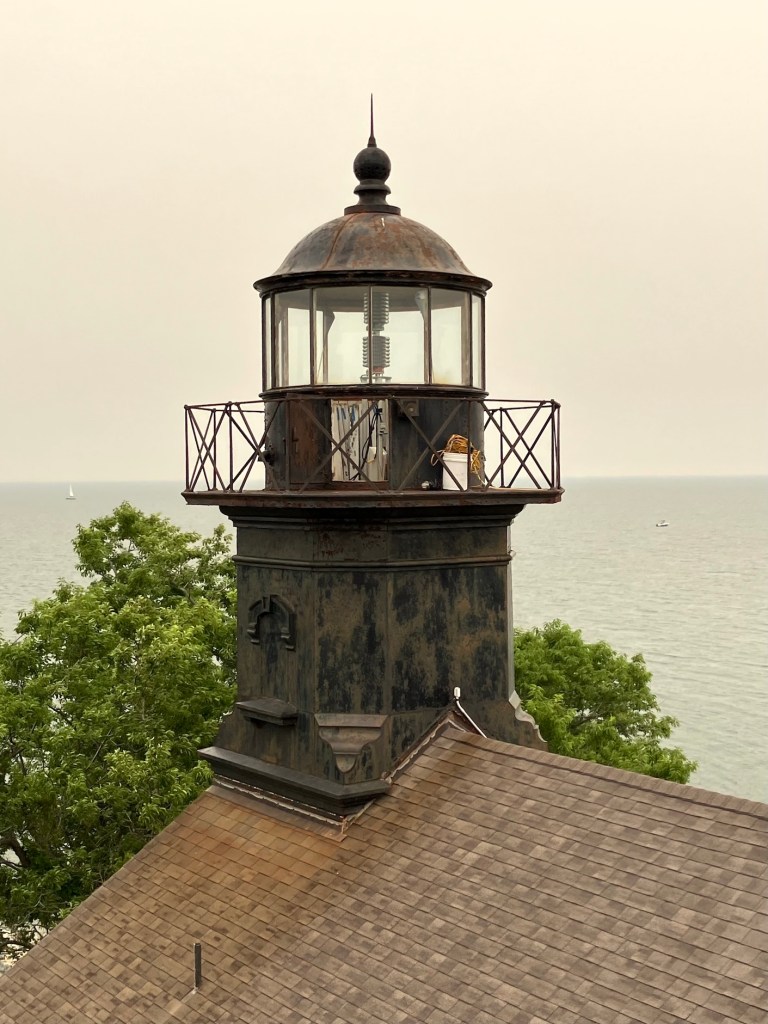
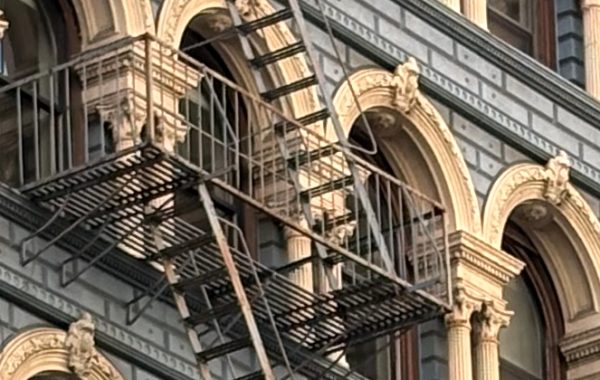
The thing that jumps out at me about that cupola is how good the cast iron looks, not in terms of weathering, but in terms of construction. The joints are tight; the corners are straight. Because we no longer build in cast iron, we tend to think of it as a single thing, but it wasn’t. The cast-iron facades and interior columns that are common in SoHo, for example, were made of pieces selected out of manufacturers’ catalogs and not specially made for any building. Unique cast-iron structures – the US Capitol dome is an example at the large end of the spectrum, this cupola is at the small end – were designed specifically for their use and were cast using new or almost new molds. They are, simply, better cast iron than the stuff we see all the time.

You must be logged in to post a comment.